Equality
Where does this issue fit into the Sustainable Development Goals?
Inequality fits within two of the Sustainable Development Goals.
Goal 5: Achieve gender equality and empower all women and girls
While the world has achieved progress towards gender equality and women’s empowerment under the Millennium Development Goals (including equal access to primary education between girls and boys), women and girls continue to suffer discrimination and violence in every part of the world.
Gender equality is not only a fundamental human right, but a necessary foundation for a peaceful, prosperous and sustainable world.
Providing women and girls with equal access to education, health care, decent work, and representation in political and economic decision-making processes will fuel sustainable economies and benefit societies and humanity at large.
Facts & Figures
- About two thirds of countries in the developing regions have achieved gender parity in primary education
- In Southern Asia, only 74 girls were enrolled in primary school for every 100 boys in 1990. By 2012, the enrolment ratios were the same for girls as for boys.
- In sub-Saharan Africa, Oceania and Western Asia, girls still face barriers to entering both primary and secondary school.
- Women in Northern Africa hold less than one in five paid jobs in the non-agricultural sector. The proportion of women in paid employment outside the agriculture sector has increased from 35 per cent in 1990 to 41 per cent in 2015
- In 46 countries, women now hold more than 30 per cent of seats in national parliament in at least one chamber.
Find our more about this Sustainable Development Goal.
Goal 10: Reduce inequality within and among countries
While income inequality between countries may have been reduced, inequality within countries has risen. There is growing consensus that economic growth is not sufficient to reduce poverty if it is not inclusive and if it does not involve the three dimensions of sustainable development – economic, social and environmental.
To reduce inequality, policies should be universal in principle paying attention to the needs of disadvantaged and marginalized populations.
Facts & Figures
- On average—and taking into account population size—income inequality increased by 11 per cent in developing countries between 1990 and 2010
- A significant majority of households in developing countries—more than 75 per cent of the population—are living today in societies where income is more unequally distributed than it was in the 1990s
- Evidence shows that, beyond a certain threshold, inequality harms growth and poverty reduction, the quality of relations in the public and political spheres and individuals’ sense of fulfilment and self-worth
- There is nothing inevitable about growing income inequality; several countries have managed to contain or reduce income inequality while achieving strong growth performance
- Income inequality cannot be effectively tackled unless the underlying inequality of opportunities is addressed
- In a global survey conducted by UN Development Programme, policy makers from around the world acknowledged that inequality in their countries is generally high and potentially a threat to long-term social and economic development
- Evidence from developing countries shows that children in the poorest 20 per cent of the populations are still up to three times more likely to die before their fifth birthday than children in the richest quintiles
- Social protection has been significantly extended globally, yet persons with disabilities are up to five times more likely than average to incur catastrophic health expenditures
- Despite overall declines in maternal mortality in the majority of developing countries, women in rural areas are still up to three times more likely to die while giving birth than women living in urban centres
Find our more about this Sustainable Development Goal.
 The Global Safer Cities for Girls Program's overarching goal is to build safe, accountable and inclusive cities with and for adolescent girls to prevent and address gender-based violence and sexual harassment. The program aims to increase girls’ safety and access to public spaces and transport and increase their active and meaningful participation in urban development and governance.

AUD 18,296
Raised from 2,861 people
 This project works in the Tafea Province of Vanuatu to promote the inclusion of women in leadership positions and address the social norms that perpetuate violence against women and girls.
AUD 17,510
Raised from 5,013 people
 This project will build safe, accountable and inclusive cities with and for adolescent girls through increasing their safety and access to public spaces, enabling their safe mobility in Kampala, Uganda; and increasing their active and meaningful participation in urban development.
AUD 45,008
Raised from 12,969 people
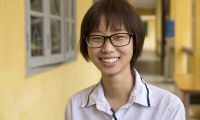 This project will build safe, accountable and inclusive cities with and for adolescent girls, through increasing their safety and access to public spaces, their autonomy and safe mobility in Hanoi and their active and meaningful participation in urban development.
AUD 25,001
Raised from 8,160 people
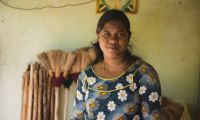 This project provides skills training and employment opportunities for girls and young women who have been vulnerable to exploitation and forced by economic necessity into early marriage.
AUD 33,030
Raised from 10,252 people
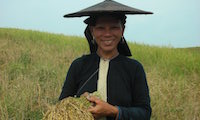 This project supports women from the poorest communities in rural Vietnam by providing financial education and training and other opportunities to improve their lives. The women form Village Savings and Loans groups where members save each week, pool their savings, and access loans with reasonable interest.
AUD 25,005
Raised from 8,878 people
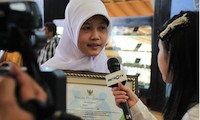 1 in every 7 girls is married before the age of 15. This project aims to prevent child marriage in Indonesia which has a massive negative effect on a girl’s life.
AUD 10,000
Raised from 4,272 people
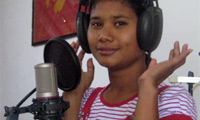 Plan’s Youth Engagement project aims to enable youth in the Lautem and Aileu districts to realise their full potential through participatory activities which build life skills, leadership, capacity and knowledge.
AUD 22,586
Raised from 9,499 people
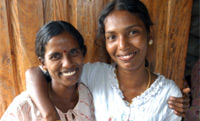 The project will focus on women’s economic empowerment to support approximately 80 poor women to collectively implement small business enterprises.
AUD 50,001
Raised from 21,510 people