Food Security
Where does this issue fit into the Sustainable Development Goals?
Goal 2: End hunger, achieve food security and improved nutrition and promote sustainable agriculture
Right now, our soils, freshwater, oceans, forests and biodiversity are being rapidly degraded. Climate change is putting even more pressure on the resources we depend on, increasing risks associated with disasters such as droughts and floods. Many rural women and men can no longer make ends meet on their land, forcing them to migrate to cities in search of opportunities.
A profound change of the global food and agriculture system is needed if we are to nourish today’s 795 million hungry and the additional 2 billion people expected by 2050.
The food and agriculture sector offers key solutions for development, and is central for hunger and poverty eradication.
Facts & Figures
Hunger
- Globally, one in nine people in the world today (795 million) are undernourished
- The vast majority of the world’s hungry people live in developing countries, where 12.9 per cent of the population is undernourished.
- Asia is the continent with the most hungry people – two thirds of the total. The percentage in southern Asia has fallen in recent years but in western Asia it has increased slightly.
- Southern Asia faces the greatest hunger burden, with about 281 million undernourished people. In sub-Saharan Africa, projections for the 2014-2016 period indicate a rate of undernourishment of almost 23 per cent.
- Poor nutrition causes nearly half (45 per cent) of deaths in children under five – 3.1 million children each year.
- One in four of the world’s children suffer stunted growth. In developing countries the proportion can rise to one in three.
- 66 million primary school-age children attend classes hungry across the developing world, with 23 million in Africa alone.
Food security
- Agriculture is the single largest employer in the world, providing livelihoods for 40 per cent of today’s global population. It is the largest source of income and jobs for poor rural households.
- 500 million small farms worldwide, most still rainfed, provide up to 80 per cent of food consumed in a large part of the developing world. Investing in smallholder women and men is an important way to increase food security and nutrition for the poorest, as well as food production for local and global markets.
- Since the 1900s, some 75 per cent of crop diversity has been lost from farmers’ fields. Better use of agricultural biodiversity can contribute to more nutritious diets, enhanced livelihoods for farming communities and more resilient and sustainable farming systems.
- If women farmers had the same access to resources as men, the number of hungry in the world could be reduced by up to 150 million.
- 1.4 billion people have no access to electricity worldwide – most of whom live in rural areas of the developing world. Energy poverty in many regions is a fundamental barrier to reducing hunger and ensuring that the world can produce enough food to meet future demand.
Find our more about this Sustainable Development Goal.
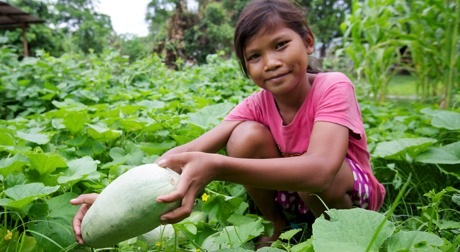
 This project aims to reduce stunting in Rote Island by helping communities establish climate-resilient nutrition gardens.

AUD 20,001
Raised from 3,137 people
 This project will support women farmers in Iringa District, Tanzania to improve their crop yields, learn how to improve their families’ nutrition and increase their income by producing and marketing soy products.
AUD 20,010
Raised from 6,122 people
 This project will strengthen livelihoods and improve income and food security of rural communities in Timor Leste through agriculture technique training and empowering rural men and women to influence local and national decision making.
AUD 20,014
Raised from 5,826 people
 This project will build food security and improve farming practices in two areas of East Indonesia, where stunting is extremely high, by setting up demonstration farms.
AUD 15,048
Raised from 4,794 people
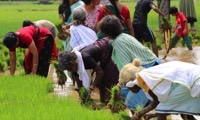 This project will facilitate community based sustainable tourism in Indian villages as a means to generate additional income for farmers. The proposed training program would empower villagers to meaningfully participate in community-based sustainable tourism.
AUD 10,005
Raised from 3,245 people
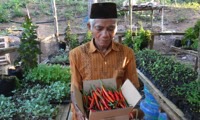 This will improve food security in remote villages by increasing incomes through small enterprises and providing on-going business and health coaching.
AUD 35,022
Raised from 11,171 people
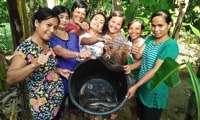 This project will increase food security to improve nutrition by diversifying food sources, increasing household income and educate the community on nutrition as well as health and sanitation activities.
AUD 25,004
Raised from 8,248 people
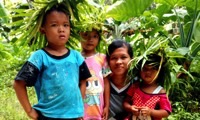 This project will help improve the farming skills of relocated fisher folk through creating and running a demonstration banana farm and educating communities through agri-business training.
AUD 25,024
Raised from 8,420 people
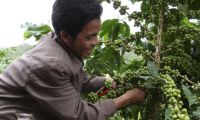 This coffee project will train poor farmers to increase their yields, produce higher quality coffee, and connect them with international markets, helping them lift their families out of poverty. By diversifying farming practices, families will also develop skills to plant and grow other crops and improve their overall nutrition.
AUD 25,027
Raised from 8,259 people
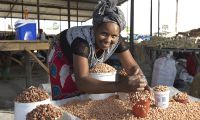 This project will support women farmers in Iringa District, Tanzania to improve their crop yields, learn how to improve their families’ nutrition and increase their income by producing and marketing soy products.
AUD 25,016
Raised from 8,323 people
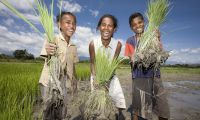 This project will contribute to equitable and resilient livelihood development, benefiting small-scale women and men producers from vulnerable communities through improvements to agricultural production and improved access to markets.
AUD 25,017
Raised from 8,152 people
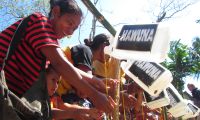 This project aims to improve the health and well-being of children under five in Sumba, Indonesia through educating the local community in child-care techniques and healthy practices.
AUD 25,001
Raised from 8,119 people
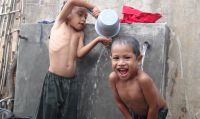 To tackle malnutrition in Parado, Indonesia, by providing clean water & sanitation through 20 dug wells and latrines. Following on from this, community nutrition gardens will be created in order to further combat the issue.
AUD 15,003
Raised from 4,720 people
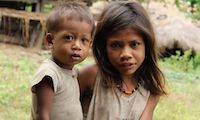 In Sumba, Indonesia, childhood malnutrition is unacceptably high. SurfAid will work with communities to establish vegetable gardens and seed banks, and improve family nutrition through cooking classes to ultimately reduce malnutrition in children under five and pregnant women.
AUD 25,004
Raised from 7,150 people
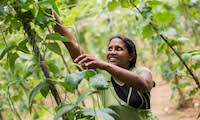 To improve food security and strengthen livelihoods of poor and marginalised communities in Sri Lanka through sustainable agricultural practices and the establishment of small scale group enterprises.
AUD 50,001
Raised from 18,085 people
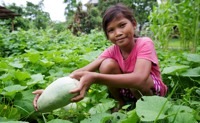 This project aims to reduce childhood hunger and malnutrition in rural Cambodia through school vegetable gardens and daily meals for students.
AUD 20,002
Raised from 7,481 people
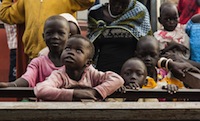 To provide the most vulnerable households and school children in South Sudan with food aid and support to sustain their livelihoods.
AUD 30,001
Raised from 22,638 people
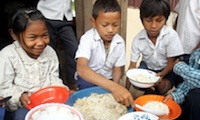 Many children in Cambodia go to school hungry or do not go to school at all because they lack the energy on an empty stomach. This project aims to increase the number of children going to school and help them to concentrate in the classroom, by providing meals for the children and their families.
AUD 20,005
Raised from 8,338 people
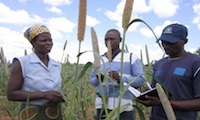 This project will procure foundation seed for the farmers, training the farmers and supporting poultry production and management in Chiredze, Chipinge & Mwenezi districts.
AUD 20,000
Raised from 11,930 people
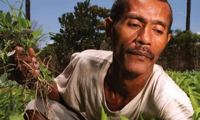 Oxfam Australia’s Timor-Leste food security and livelihoods program is working to reduce hunger and improve income, access to food and living standards for 1185 people (263 households) in Oecusse and Covalima districts in Timor-Leste.
AUD 20,211
Raised from 9,703 people
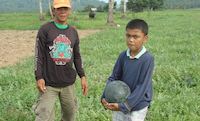 By converting to organic farming techniques, families are reducing expenses, increasing crop yields and income and starting to break the cycle of poverty. Includes training, the provision of farming equipment, seeds and small livestock.
AUD 20,001
Raised from 8,746 people
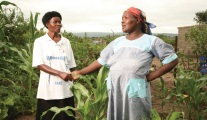 Creating solutions to hunger, HIV and poverty for people in the rural district of uMkhanyakude in KwaZulu-Natal through community veggie gardens. Quality nutrition can reduce HIV-related illness and AIDS-related deaths, and is vital for breaking the poverty cycle.
AUD 34,184
Raised from 14,963 people
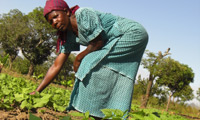 To help 180 of the poorest families improve their livelihoods and get through the yearly ‘hungry season’ through training/mentoring in new farming methods, provision of seeds, livestock and equipment.
AUD 20,001
Raised from 8,210 people
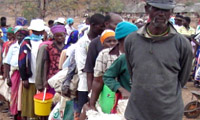 This project aims to save lives through a feeding program for vulnerable people such as children who are at risk due to the severe lack of food in Zimbabwe
AUD 10,001
Raised from 3,998 people